
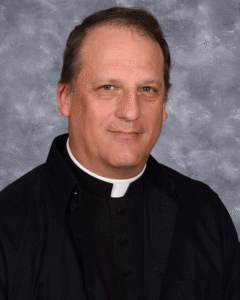
Fr. Kondik's Written Homilies
Trust God in the Storm
Rev. Curtis Kondik
People say, “If it doesn’t kill you, it’ll make you stronger.” But you and I know life doesn’t work that neatly. Some things actually will kill you — or a loved one. Some things break a family. Some things leave a wound that is not yet healed. A sudden loss can make life feel disrupted — and there are moments when you simply need to acknowledge the hurt. A long illness can wear someone down. A broken relationship can leave someone guarded. But we can choose how to respond.
And we see this in Peter and the apostles. God gave them real freedom — freedom to trust, freedom to hesitate, freedom to fail. Peter could step out of the boat, and Peter could sink. The apostles could follow Jesus, and they could scatter in fear. But God’s mercy and grace were deeper than their weakness, and His providence carried them forward anyway. Their freedom was real, but God’s love still brought His plan to its good end. That is the pattern of salvation history: human weakness, divine mercy, and a final outcome shaped not by our strength, but by God’s fidelity.
Do moments of trial make us stronger — or do they make us more dependent on God, more humble, more aware that He is our strength? Humility is the answer. We are what we are; God is God. And humility is exactly where today’s Gospel begins. The disciples — grown men, seasoned fishermen — are worried. The boat is tossed. The wind is against them. They’re stunned — unable to see clearly, even when Christ is right in front of them. And fear distorts their vision. They mistake Jesus for a ghost.
Storms are real, and when they strike, we can overreact. When emotions run high, we don’t see things clearly. Fear is the moment when the battle shifts — from the storm outside to the storm inside.
Peter shows us how fast courage can evaporate. He steps out of the boat. He actually walks on water. And then he sinks. He walks when his eyes are on Jesus. He sinks when his eyes shift to the wind. The storm didn’t change. His focus changed.
If that’s true for Peter, it’s true for us. And if it’s true for us, it’s true for the Church. The boat in the Gospel is more than a boat — it’s the Church. And the storms around us can feel overwhelming — bad news, cultural pressure, discouraging statistics, shrinking trust, rising hostility. But storms don’t define the future. Our Lord leads us to our future.
And He has already spoken the decisive word: “Behold, I am with you always, even to the consummation of the age.” Stand firm. Stay in the boat. Keep your eyes on Him. Let His promise calm you. Let His Presence calm the storm. Let His love lift you the way it lifted Peter.
Once this week, tell God exactly what you need. Out loud. Directly. Confidently.
He hears you. He knows you. And He will give you what is best — because His love is powerful, His wisdom is perfect, His mercy is steady, and His respect for your freedom never cancels His desire for your good.
Because the One who reached for Peter reaches for you. The One who steadied the waves steadies your heart. The One who leads His Church leads you home. And the One who said, “I am with you always,” is with you now.
Lord Jesus, keep my eyes on You — now, and in every storm that comes.
The 12th Week in Ordinary Time
Rev. Curtis Kondik
Some of you may not know this, but years ago I went through Air Assault training in the Army. On the obstacle course there was a climb that looked simple from the ground — two telephone poles rising about thirty feet, with 2×6 boards bolted across as rungs.
At the bottom it felt easy. But the higher you climbed, the farther apart those rungs became — just enough that you had to stretch for the next one. And the higher you went, the more you felt it: less to hold onto, more space beneath you, and a growing sense that turning back wasn’t an option.
About halfway up, everything in you said, “Stop. Go back down.” But you couldn’t go back down — not safely. The only way forward was up.
And when you reached the top, there wasn’t a platform — just that last board. To start the descent, you had to throw your leg over it and swing to the other side. The fear was real, but I kept moving. And when my boots finally hit the ground again, it felt pretty good.
In today’s Gospel, Jesus is forming His apostles for something far more important than managing fear. He’s preparing them for the mission — to announce forgiveness, to call people away from sin, and to lead them toward heaven.
He isn’t giving them sacramental grace yet — that comes after the Resurrection — but He is forming them. He’s giving them clarity, trust, and the courage to follow Him. He’s shaping them for the moment when He will entrust them with the sacraments, the very means by which His grace continues His mission in the world.
After the Resurrection, Jesus breathes on them and says, “Whose sins you forgive are forgiven.” That’s when the mission becomes sacramental. That’s when grace becomes the way He heals and strengthens His people.
Confession isn’t just about wiping away sin. It restores the soul. It strengthens what is weak. And it gives us the grace to avoid the very sins we confessed. It helps us grow past them, so we don’t stay stuck in the same patterns.
And for many Catholics, it’s not that they reject Confession. It’s simply that they’ve never really thought about the grace the sacrament gives — the healing, the strength, the freedom. The very things Jesus wanted His apostles to bring into the world.
Jesus formed the apostles to be mission‑focused — not driven by fear, and not held back by what others might think. After the Resurrection, we see the change clearly. Peter, who once denied Jesus, now stands before the same authorities and speaks the truth openly. He isn’t guided by fear anymore. He’s anchored in Christ.
And we see the same pattern in the saints. Think of Joan of Arc. She wasn’t impressive by worldly standards — young, ordinary, not someone people expected greatness from. But she wasn’t guided by the fear of human opinion. She followed the truth God placed before her, and grace gave her the courage to live it.
The apostles, Joan of Arc, and so many others show us the same thing: Grace orders the heart toward truth and frees it from the fear of human judgment.
And that same grace is offered to us. Not to make us flawless, but to help us keep moving toward heaven.
If you feel stuck, weighed down, or afraid to take the next step — come to Confession. The apostles received extraordinary graces for their mission. We receive the grace we need for ours.
And grace — especially sacramental grace — is how we climb.
Love Your Enemy Explained
Tuesday of the 11th Week in Ordinary Time
Rev. Curtis Kondik
Good morning,
To speak as plainly as I can — when Jesus tells us to love our enemies, He’s not talking only about the neighbor who annoys you or the relative who hurt your feelings. We all know there are people out there — criminals in the news, corrupt leaders, people who abuse power — whose actions are genuinely harmful. And our natural reaction to them is exactly what you’d expect from a sane, moral person: anger, disgust, fear, frustration. That reaction isn’t sinful. It’s human.
But looking at it from God’s perspective helps us understand what Jesus is pointing us toward. God wants us to love our enemies. In fact, God loves them because they are His creatures, and their very nature — the way He made them — is good to Him. But that does not mean He is pleased with them or with what they’re doing. That’s where His desire for their conversion and salvation comes to the forefront. He wants them to turn back to Him, even the ones doing the most damage. That’s the Father’s heart. So what does that mean for us? It means we don’t let their behavior dictate the condition of our soul. We don’t let their sin harden us. We don’t let their choices turn us into people of bitterness or contempt. We don’t let the news cycle steal our peace or our charity.
Loving an enemy doesn’t mean liking them, trusting them, or pretending their actions aren’t destructive. It also means having enough compassion to not want to see them to end up in Hell. It means praying, “Lord, have mercy on them and give them the grace to repent and save their souls. Help me to pray for them, even though it goes against how I feel right now.” That’s the whole point.
You can name the evil for what it is. You can seek justice. You can vote responsibly. You can protect your family. But you also pray — because prayer keeps your heart open to God instead of being shaped by anger. A simple prayer is enough: “Lord, bless them. Change them. And keep my heart open to Your grace.”
Let us imitate Jesus, who was willing to lay down His life for people who didn’t deserve it, but who, out of sheer generous love, wanted to heal what was broken in them. That’s the love He invites us to grow into.
For Pope Leo XIV — Pope Leo XIV That the Holy Father may continue to lead the Church with a heart open to God’s will, showing the world how to love without compromising truth, and how to desire salvation even for those who oppose the Gospel. We pray to the Lord.
For Bishop Edward — Bishop Edward That our bishop may shepherd this diocese with wisdom and courage, helping us keep our hearts free from bitterness as we face the challenges of our time. We pray to the Lord.
For those who do harm in our society — Those who do harm For all who commit violence, corruption, or abuse of power — that God, who is not pleased with evil but desires every soul’s salvation, may break through their hardness of heart and lead them to repentance. We pray to the Lord.
For our own hearts — Our own hearts That we, gathered here today, may not let anger or fear close our hearts to grace, but may learn to pray even for those who trouble us, so we may grow into the likeness of our heavenly Father. We pray to the Lord.
Sacred Heart of Jesus
Rev. Curtis Kondik
Dear friends in Christ, today is a day of deep joy for our parish family. We stand before the Sacred Heart of Jesus on His great feast, and on the feast of our own parish. This is our day — our reminder of who we are, and whose Heart claims us.
And this year, our parish’s feast is joined to a moment of great significance for the entire Church in our country. Just two days ago, on June 11, 2026, the bishops of the United States gathered in Orlando, at the Basilica of the National Shrine of Mary, Queen of the Universe, to consecrate our nation to the Sacred Heart of Jesus. They chose this year intentionally, as our country marks the 250th anniversary of the Declaration of Independence.
Consecrating something to God is never small. Aquinas says it means setting something apart for God. Bonaventure says it orders the heart toward its true end. So when the bishops consecrated the United States to the Sacred Heart two days ago, they weren’t performing a ceremony. They were placing our nation under Christ’s Heart — acknowledging that our healing and our future rest in Him.
This act of consecration is rooted in a devotion that stretches back centuries, to the visions given by Christ to St. Margaret Mary Alacoque, when He revealed His Heart as the sign of His sacrificial love for the world. And when we speak of those visions, many of us think immediately of the image of the Sacred Heart — aflame with love, wounded yet pouring out mercy.
But the Lord also entrusted to her a simple and beautiful devotion that many Catholics have heard of but not fully understood: the Nine First Fridays. Jesus asked that the faithful receive Holy Communion on the first Friday of nine consecutive months, offering that Communion in a spirit of love and reparation to His Heart. And He attached remarkable promises to those who practice this devotion with sincerity: peace in families, comfort in trials, blessings upon homes where His Heart is honored, fervor for the lukewarm, and — most especially — the grace of dying in His friendship, strengthened by the sacraments. It is a quiet, steady way of returning again and again to the Heart of Jesus — and allowing His Heart to reshape our own.
What a providential moment for us as a parish. We bear the very name of the Sacred Heart. We gather under the patronage of the Heart that loves, heals, and saves. And now our entire nation has been entrusted to that same Heart.
When we look upon the Heart of Jesus — crowned with thorns and burning with love — we are seeing the love of God made visible. His Heart shows a mercy that never tires, a compassion that enters our suffering, and a love that stays constant even when wounded. This is the Heart that receives us as we are, heals what is broken, and sends us out to share His love.
Venerable Fulton Sheen understood this well. He reminded the world that the Sacred Heart is the human Heart of God — a Heart that suffers, longs, breaks, and loves to the end. For Sheen, the Sacred Heart answers the loneliness and fragmentation of our age. Where society isolates, Christ gathers. Where culture divides, Christ unites. Where people feel unseen or unloved, Christ says, “You are mine.”
And Sheen never tired of pointing to the Eucharist as the continuation of that love. The Heart pierced on Calvary gives itself to us again — quietly, humbly, completely. In the Eucharist, the Heart of Jesus beats for us still.
When Jesus invites us to learn from Him, He names two virtues: meekness and humility. Meekness is strength choosing gentleness — the strength to stay patient, to forgive, to trust God rather than react in anger. Humility is knowing who we are before God and placing His will before our own. These virtues shape the Heart of Christ, and they shape any parish that bears His name.
And so today, on our patronal feast, we ask a simple question: What does it mean for our parish to bear the name “Sacred Heart of Jesus”? It means we are called to be a community marked by mercy, patience, and compassion. A community where the wounded find welcome. Where the weary find rest. Where the sinner finds forgiveness. A community that reflects the Heart of Christ to the world around us.
And now, as our bishops consecrate the United States to the Sacred Heart, we join our voices and our hearts to theirs. What the Church asks for our country today, we ask for ourselves: to return to the Heart of Christ, to trust His mercy, to let His love heal what is broken, and to allow His Heart to shape our own.
This feast is not only a celebration — it is a mission. The Heart of Jesus is not meant to be admired from a distance; it is meant to be imitated. So we ask God for the grace to grow in virtue, to imitate Christ, and to let His Heart be seen in our words, our actions, and our life together as a parish.
Jesus, meek and humble of Heart, make our hearts like unto Thine.
Corpus Christi
Rev. Curtis Kondik
Dear friends in Christ,
Today we celebrate the great feast of Corpus Christi, giving special attention to the gift of the Blessed Sacrament — the Body and Blood of Jesus Christ. This is not ordinary food, but the daily bread we need for our spiritual journey, the food that sustains us on the road to eternal life.
God is a generous Father who gives His children the very best food. Earthly food nourishes the body, but this new manna from heaven nourishes the body, the soul, and the heart. This heavenly food is different because it gives sacramental grace — grace with real effects in the soul.
First, the Eucharist unites us to Christ. This is its primary effect. Jesus promises in John 6: “Whoever eats my flesh and drinks my blood remains in me and I in him.” The Eucharist is the deepest communion with God we can have in this life.
Second, the Eucharist increases sanctifying grace. St. Thomas teaches that it restores, strengthens, and perfects the supernatural life within us.
Third, the Eucharist forgives venial sins — not by replacing confession, but by increasing charity, which burns away lesser sins. Aquinas writes: “This sacrament is for the remission of venial sin.” (ST III, q. 79)
Fourth, the Eucharist strengthens us against future sin. It restrains temptation and gives spiritual strength the way food strengthens the body.
Fifth, the Eucharist deepens charity. Because the Eucharist is Christ — and Christ is love — receiving Him inflames love of God and neighbor.
Sixth, the Eucharist unites us to the Church. One bread makes one body. St. Thomas calls it “the sign of ecclesial unity.”
Finally, the Eucharist is a pledge of future glory. Jesus promises: “I will raise him on the last day.” Every Communion is a foretaste of heaven.
Let us cherish this gift and prepare our hearts each time we receive it — through examination of conscience, avoiding sin, regular confession, and detachment from worldly desires. Let us satisfy our deepest hunger by frequently receiving the Lord’s Body and Blood as we wait in hope for the day when we will be united fully with Christ in heaven.
And let us rejoice always with the Church’s ancient words from Benediction:
“He has given them bread from heaven, having within it all sweetness.”
Fifth Sunday of Easter
Rev. Curtis Kondik
My dear brothers and sisters in Christ, on this Fifth Sunday of Easter our parish continues to rejoice. Earlier today, at our noon Mass, eleven of our children received their First Holy Communion. Even though that celebration took place at another liturgy, its grace belongs to all of us. Every sacrament strengthens the entire Body of Christ, and so today our whole parish family gives thanks for the gift those children received.
The readings this weekend speak beautifully to what we celebrate: who Jesus is, who we are called to become, and how the Holy Eucharist draws us toward the Father’s house.
In the first reading, the early Christian community is growing so quickly that some widows are being overlooked in the daily distribution of food. The apostles respond by choosing seven faithful men—our first deacons—to assist them. This moment reveals something essential: the Church is a living family, and every person has a place. The apostles preach and pray, the deacons serve, and the whole community supports one another. When each member embraces their vocation, the Church becomes strong.
This is true for us as well. All of you who strive to live as faithful Catholics—who believe in Christ, are nourished by the sacraments, and seek to follow the Gospel—have a real place in this parish. In Christ and through baptism, you are members of His Body. You are “living stones” in the spiritual house God is building here, each with a unique role in His plan.
In the second reading, St. Peter calls Jesus the “cornerstone”—the stone on which everything else rests. And he tells us that we, too, are “living stones.” God is shaping our lives, patiently and lovingly, so that we fit perfectly into His design. St. Bonaventure said that God works on our souls the way a craftsman shapes a stone—carefully, intentionally, and always with love.
Then we come to the Gospel, where Jesus speaks words every heart needs: “Do not let your hearts be troubled.” He says this on the night before His Passion, when His disciples are anxious and confused. He knows their fears, just as He knows ours. And He gives them the greatest gift He can: Himself.
“I am the Way, the Truth, and the Life.”
St. Thomas Aquinas helps us understand these words. Jesus is the Way because He leads us to the Father. He is the Truth because He reveals the Father. He is the Life because He shares God’s own divine life with us.
And how does He share that life? Through the Holy Eucharist.
Here the Church speaks with clarity and love: In the Eucharist, Jesus Christ is truly, really, and substantially present. At the consecration, by the power of the Holy Spirit and the words of Christ, the substance of bread and wine is changed into the substance of His Body and Blood. This is what the Church calls transubstantiation. The appearances of bread and wine remain, but what they are has been transformed.
So when we come forward to receive Holy Communion, we do not receive a symbol pointing to Christ—we receive Christ Himself: His Body, His Blood, His Soul, and His Divinity. The same Jesus who speaks in today’s Gospel, the same Jesus who died and rose, the same Jesus who prepares a place for us in the Father’s house.
To the eleven children who received First Communion today—though they are not here at this Mass—we hold them in prayer. They have received the One who loves them more than anyone else ever could. And to all of you gathered here, whether you have received the Eucharist thousands of times or are preparing to receive it later today, the same truth applies: every Communion is an encounter with the living Christ.
My friends, whether you are seven or ninety-seven, the message is the same: do not let your hearts be troubled. Cling to Christ. He is the Way when life is confusing. He is the Truth when the world is noisy. He is the Life when we feel weary or afraid. Our strength does not come from ourselves. It comes from Jesus—present in His Word, present in His Church, and above all, present in the Holy Eucharist.
Let us cling to Him with all our hearts, until the day He brings us home to the place He has prepared for us.
Homily for the Fourth Sunday of Easter
John 10:1–10
Fr. Curtis Kondik
On this Good Shepherd Sunday, Jesus identifies Himself as the Shepherd who leads and the Gate through which the sheep enter. He is describing His unique role in salvation: He is the one who teaches, guides, and gives access to the life of God. His voice carries authority because it is the voice of truth.
Anyone who has watched sheep with their caretaker knows how accurate this image is. Sheep respond to the voice they trust. They hear it first, recognize it as safe, and move toward it. They do not hesitate. They know who calls them.
Jesus uses this image because it reflects how the human person responds to God. St. Thomas Aquinas teaches that we recognize truth when our minds are clear and our hearts are directed toward what is good. Christ’s voice is recognizable because it is steady, trustworthy, and grounded in God. When a person seeks what is true, they naturally move toward Christ.
Jesus also acknowledges that some do not hear His voice. Aquinas explains this simply: the mind can become distracted, and the heart can become pulled toward other priorities. When that happens, a person does not perceive the truth clearly, even when it is spoken plainly. This is not a failure of Christ’s voice. It is a sign that something in the listener needs healing.
Yet Christ continues to call. The Shepherd does not stop speaking because someone stops listening. Aquinas teaches that grace always moves first. God initiates every return. Even when someone appears distant from the Church or inattentive to the sacraments, grace can work quietly and effectively. Christ’s call is constant because His mission is constant.
Aquinas also notes that the human heart can turn quickly when touched by grace. A single moment of clarity can redirect a life. A person can rediscover the voice of Christ after years away. Grace makes this possible by healing and strengthening the person from within.
This Gospel also clarifies our role. We stay close to the sacraments. We listen to the teaching of the Church. We pray steadily. We live the Christian life with integrity. These practices keep us attentive to the Shepherd and cooperate with the work of grace in the world.
Aquinas would describe the Christian disposition in simple terms: stay clear, stay patient, stay confident. Clarity keeps our attention on Christ. Patience allows God to work in His timing. Confidence trusts that Christ knows every person and continues to call them, even when we cannot see it.
Jesus concludes with a promise: He comes so that we may have life and have it abundantly. This abundance is the life of grace—faith, hope, and charity—leading us toward communion with God.
On this Good Shepherd Sunday, we entrust ourselves and those we love to the Shepherd who knows His sheep, calls them by name, and leads them into the fullness of life.
Third Sunday of Easter – Emmaus
The Emmaus story begins with two disciples walking a familiar road, speaking in the subdued way people do when they’re carrying disappointment and confusion. They had hoped for something more. They had expected something different. And now they are trying to make sense of what feels like the end of a story.
During that slow, uncertain walk, Jesus comes. They don’t recognize Him, yet something in them begins to stir as He speaks. Augustine said their hearts were being healed before their eyes were opened. Gregory the Great wrote that love prepared them to recognize him. The Fathers saw in this moment a pattern of how the risen Christ approaches His people — gently, patiently, faithfully.
The Church has always held these encounters with great seriousness. The disciples are not expecting a miracle. They are not imagining a vision. They meet Someone real — Someone who knows them, teaches them, and shares a meal with them. Cyril of Alexandria said the risen Christ carries divine life in His glorified body while remaining truly human. Leo the Great taught that the Resurrection brought Christ’s humanity to its fullness. These are testimonies.
And the pattern of Emmaus has shaped the Church from the beginning. Christ opens the Scriptures, and hearts begin to open. He breaks the bread, and His presence becomes clear. Origen said that whenever the Scriptures are opened with faith, Christ walks with His people. And whenever the bread is blessed and shared, He reveals Himself again.
When we look at our own time, this pattern casts a gentle but honest light. Many who once walked closely with the Church no longer gather for Mass. Pew Research tells us that about three‑quarters of Catholics are not at Mass each Sunday. It’s easy to hear a number like that and move on, but behind it are people we know and love — people who once listened to the Scriptures each week, people who once recognized Christ in the Eucharist.
Pew also notes that only about one in five Catholics both attend Mass weekly and say their faith is central in their lives. And confession has faded even more. Most Catholics — close to eighty percent — say they rarely or never go. These numbers are not meant to discourage us. They simply remind us of how precious the gift before us truly is. The Church and the sacraments are the special aids for our spiritual sojourn-- as Peter calls it.
Because here, in this church, something greater than Emmaus unfolds. The disciples recognized Him in the breaking of the bread. But we do not simply remember that moment — we enter it.
Here, our risen Lord meets us with the fullness of His self‑giving. Here, He strengthens what is weak, heals what is wounded, and fills what is empty. Here, our eyes are opened in the breaking of the Bread, and our hearts recognize the One who has been walking with us all along. Here we see His love outpoured for us.
During this Easter season, let us turn with trusting hearts to Jesus, who draws us close and offers us His saving gifts, His mercy, His love. And when we come to the altar, we stand before the mystery of the Calvary Sacrifice made present. The Lamb of God is truly with us — risen, living, and giving Himself for us. May the Lamb of God, present upon this altar, renew us in His mercy and keep us faithful in His grace.
Homily on John 11
The Raising of Lazarus
Fr. Curtis Kondik
Beloved in Christ, the Gospel set before us today unveils a mystery as old as humanity and as new as the dawn: the Lord of Life stands before the tombs of His friends and commands the dead to rise. He does not merely restore life; He is Life, and wherever He arrives, death begins to retreat.
Before the miracle bursts forth, St. John gives us a detail that deserves our reverent attention. He tells us that Jesus was “perturbed.” The word sounds gentle in our tongue, but the Evangelist’s Greek carries the weight of a storm. The Fathers tell us that Christ’s soul trembles with a holy indignation. Chrysostom speaks of “sorrow mingled with righteous anger.” Augustine says the Lord is moved because He beholds the ruin that sin and death have wrought in the creatures He fashioned in love. Christ is not disturbed by Mary’s tears; He is stirred by the tyranny of death itself. In that moment, we glimpse the divine heart, a heart that refuses to surrender even one beloved soul to the shadows.
From this inner stirring, Christ advances toward the tomb. Aquinas notes that He does not work from afar. He approaches the place of decay. He commands the stone to be removed. He calls Lazarus by name. He orders the burial cloths to be loosed. Each gesture reveals the manner of His grace: He draws near, He opens what is sealed, He speaks personally, and He frees with authority.
This is not merely the story of a man in Bethany. It is the pattern of salvation. It is the revelation of how Christ deals with us. He sees the hidden chambers of our hearts where hope has grown cold. He sees the burdens we carry, sorrows that age us, anxieties that tighten around us, wounds that have never fully healed. And He does not stand at a distance. He steps toward our darkness with the same resolve He showed at Lazarus’s tomb.
For our Elect who will undergo the Scrutiny today, this Gospel is addressed to you with particular tenderness. The Lord calls you by name. He desires that every stone be rolled away, every shadow dispersed. But this word is also for all of us, older parishioners who carry heavy burdens, families stretched thin, anyone who feels the weight of life pressing inward. Christ stands before each of our tombs and speaks the same command: “Come forth.”
Lazarus does not raise himself. He rises because he hears the voice of the Lord and obeys.
And so, dear friends, let us end where the Gospel leads us: to prayer, to confidence, to hope. Let us ask God for the grace to rise from our own tombs, those places where fear, sin, or sorrow have sealed us in. Let us approach Christ with trust when we pray for those we love, for He hears every plea uttered in faith. He stands before their tombs as surely as He stands before Lazarus’s, and He offers them life.
May we all hear His voice. May we all respond. And may we all arise.
Amen.
LAETARE SUNDAY HOMILY — YEAR A
The Healing of the Man Born Blind (John 9)
Fr. Curtis Kondik
Beloved in Christ,
In the very heart of Lent, the Church commands us to rejoice: Laetare, Jerusalem—Rejoice, O Jerusalem. Dom Prosper Guéranger, the great Benedictine liturgical theologian, called Laetare Sunday “the smile of the Church in the midst of her tears”—a rose-colored dawn breaking into the violet of penance.
Why joy now? Because today’s Gospel reveals that grace is already at work within us.
The healing of the man born blind is not simply a miracle. It is a living icon of the spiritual life—a map of how God sanctifies the soul, how grace grows, how purification unfolds, and how the sacraments operate.
St. Augustine says plainly: “The blind man is the human race.” Blind from birth—this is original sin. Unable to see Christ—this is the darkened intellect. Unable to walk rightly—this is the weakened will. Every spiritual journey begins here.
And notice something essential: the blind man does not call out. He does not ask for healing. He does not even know who Jesus is. St. John Chrysostom marvels: “Before we seek Him, He seeks us.” This is the first law of the spiritual life: grace always begins with God.
Then Christ performs a strange act. He spits on the ground, makes clay, anoints the man’s eyes, and sends him to wash in Siloam. The Fathers saw in this gesture the entire saving plan of God.
- St. Irenaeus teaches that Christ uses the matter of creation to heal creation. This is the sacraments: God using matter to give grace.
- St. Cyril of Jerusalem sees in the anointing a figure of Baptism and Confirmation—the divine touch that infuses supernatural life.
And when Jesus commands, “Go, wash,” He reveals the second law of the spiritual life: grace requires cooperation. St. Augustine puts it succinctly: “He who created you without you will not justify you without you.”
The man obeys. He goes. He washes. He returns seeing.
This is the entire spiritual life in one movement: Christ initiates, we respond, grace heals, faith grows.
And watch how his faith grows. At first he calls Jesus “the man.” Then “a prophet.” Then “from God.” Finally, when Christ reveals Himself, the healed man falls to his knees and says, “Lord, I believe.”
This is the ascent of the soul: faith → deeper faith → illumination → union.
St. John of the Cross teaches that the soul must be purified of its blindness before it can receive the full light of God. The Gospel shows this purification happening. The Pharisees interrogate him, insult him, cast him out—and through this trial, his faith becomes clearer, stronger, purer.
St. Francis de Sales writes: “The measure of our progress is the measure of our acceptance of the cross.”
This is why the Church rejoices today. Laetare Sunday is not a break from Lent; it is the revelation of what Lent is accomplishing. Purification is underway. Grace is increasing. The soul is beginning to see. The light of Easter is already dawning.
And the Gospel gives us practical guidance for accelerating this growth.
- Like the blind man, we must obey Christ in the small things. St. Thomas Aquinas teaches that “grace increases by every act of charity.”
- We must wash in the pool of Siloam—and this means Confession. Not the bare minimum of once a year, but a sincere, regular cleansing. Monthly Confession is one of the most effective means for overcoming sin, rooting out vice, and strengthening virtue. The saints are unanimous: frequent Confession is a school of humility and a steady engine of spiritual progress.
- We must accept the purifications God sends, for they sharpen our spiritual sight.
- We must profess Christ boldly, for faith grows when it is expressed.
But the Gospel does not end with sight. It ends with worship. The healed man kneels before Christ and says, “Lord, I believe.”
St. Thomas teaches that the perfection of the Christian life is charity expressed in adoration.
And now, beloved, we approach the Holy Sacrifice of the Mass, where the saving work of Christ is made present on the altar. Here, the same Christ who anointed the blind man’s eyes, who sent him to wash, who revealed Himself as Lord, offers Himself anew to the Father for our sanctification.
From this Sacrifice flow the graces that
- enlighten our darkness,
- strengthen our will,
- purify our hearts,
- increase sanctifying grace,
- and conform us more perfectly to Christ.
Dom Guéranger writes that the Mass is “the Sun of the liturgical year, from which every grace of every season flows.” Here, in this oblation, the light of Easter already begins to dawn in our souls.
May the graces we receive from this Holy Sacrifice open our eyes more fully, so that, like the man born blind, we may fall before Christ and say with a purified heart:
“Lord, I believe.”
Amen.
3rd Week of Lent
Healing, Forgiveness, and Spiritual Freedom
Healing is the grace‑filled transformation of our relationship to the very event or person that caused our wound. When we are hurt—physically, psychologically, or spiritually—the injury does not remain on the surface. It reaches into our memory, imagination, judgments, and even our will. Pain creates false associations that linger long after the moment has passed.
A harsh word, a deep injustice—these experiences settle into us and begin shaping how we see reality. And the more tightly we hold onto the injustice, the more the pain grows. The wound deepens. The memory tightens. The negative emotions linger. Many people carry these unhealed injuries into marriage, family life, and even their spiritual life without realizing it.
This is why forgiveness is not optional. Jesus warns us in the parable of the unforgiving servant that the one who refuses to forgive is handed over to torment—not because God delights in punishment, but because unforgiveness itself becomes a kind of torture. Bitterness, resentment, and the constant replaying of the injustice imprison the heart.
Forgiveness begins in the intellect—we choose to forgive—but the emotions may take longer to follow. This is simply the human process of integrating the wound into a place of peace.
To heal, we must be willing to suffer a little. We must dig around, find where the pain is, identify the wound, and look at it honestly. Healing is painful because it requires us to revisit what we would rather avoid. But unless we name the wound, grace cannot reach it. We must ask: What is the core of my hurt? Why did this affect me so deeply? What sensitivity or unmet need lies beneath it?
And we must be prepared for the process to take time. Just as physical injuries require rest and patience, interior wounds also need time to heal. We pray for inner healing, trusting that grace will enlighten the mind and strengthen the will.
We also ask God to bring good even out of the evil we have suffered. This is the greatness of soul—the magnanimity—to rise above the wound and allow grace to transform what was harmful into something fruitful. Healing is not only about closing the wound; it is about letting God draw something good from it.
Many of our deepest wounds come from our families. Patterns of hurt can echo across generations. But by God’s grace, we can overcome these wounds. We can be the ones who finally put an end to the pattern. Healing allows us to “right the course” of our lives, to reorder our hearts in relationship to the wound, and to stop the cycle from continuing.
Above all, we remember that Christ is the physician of our souls. He came to redeem us, and He chose to undergo a brutal passion—thrashing, piercing, crowning—so that every wound in us could be touched by His own. Nothing in us is beyond His healing.
And in heaven, no one is wounded. In the spiritual life, it is necessary that we end up healed from all our wounds. God desires to restore us so completely that nothing within us remains twisted by fear, resentment, or past injury.
Healing is not only a gift—it is the path to spiritual freedom. It allows us to forgive, to love, and to live without dragging yesterday’s pain into today’s relationships. It is the journey toward becoming who God created us to be.
Prayer
Lord, You know every wound within us. Give us the courage to face what hurts and the grace to offer our healing to You. Teach us to depend on Your goodness and Your tenderness. Help us to bring good even out of the evil we have suffered. Grant us greatness of soul, that we may overcome the wounds in our families and finally put an end to patterns of hurt. As You enlighten our minds and strengthen our wills, shape our hearts to be like Yours—clement, merciful, and free. Use even our pain as a path to holiness, so that in healing, we may become more like You. Complete in us the work of Your love, and lead us into the freedom You desire for all Your children. Amen.
The Inspiring Example of Jesus
He Shows Us the Way
Brothers and sisters, as we begin Lent, the Gospel leads us into the desert with Jesus. And the saints tell us something deeply consoling: Jesus is not only resisting temptation—He is showing us the way. His inspiring example becomes the pattern for our own victories.
Satan fell through pride. Tradition says his cry was, “I will not serve.” Pride closed him in on himself and cut him off from God. And in the desert, Satan tries to pull Jesus into that same spirit—self‑reliance, self‑importance, shortcuts to glory.
But Jesus is not like us. He knew the mind of the tempter. He could never be tricked, never persuaded to give in. There was never a moment when He was in danger of falling. And yet—He allowed the temptation. He permitted Satan to speak. He endured the hunger, the loneliness, the pressure. Why? As an act of humility, and as an example for us to follow.
Jesus stands before the devil undisturbed, resolute, utterly focused on what truly matters—our salvation. He shows us that victory over temptation does not come from panic or fear, but from a humble heart anchored in the Father.
The saints see this clearly. St. Augustine says Christ’s humility is the medicine that heals our pride. St. Thomas Aquinas teaches that humility is the foundation of every virtue. St. John Chrysostom says Jesus goes into the desert “to teach us how to conquer the devil.” And for our parishes, this comes alive in the hearts we love most.
The Sacred Heart of Jesus is the perfect image of humility—a Heart that bends low to serve, a Heart that conquers not by force but by love. When we look at His Heart, we see the opposite of Satan’s pride. We see the way forward.
St. Clare, who loved the Heart of Jesus with such purity, understood this path. She embraced humility and detachment—not to make life harder, but to make her heart more free. She said that when we cling to nothing but Christ, “the enemy has nothing to take hold of.” That is how she became victorious.
And this is why the Church gives us the practices of Lent—not as punishments, but as ways to grow in virtue, especially the virtue the saints call mortification: the grace‑filled subduing of our unruly appetites so that our hearts can be free for God.
- Fasting teaches us that we do not live by bread alone.
- Abstinence from meat on Fridays unites us with Christ’s sacrifice and gently trains the heart to say “no” to lesser things so we can say “yes” to greater ones.
- Prayer forms the habit of turning to God at all times—especially when we are tempted.
- Almsgiving teaches us to share what God has given us so that we do not cling to our possessions, no matter how great or small they may be.
These practices are small, but they shape the heart. They make room for humility. They make room for grace. They make room for victory. At the beginning of Lent, Jesus does not say, “Be strong like Me.” He says, “Follow Me. Walk humbly with Me. Let My Heart teach your heart.”
And when we walk these forty days with the Sacred Heart and with St. Clare’s simplicity, we discover the truth St. Teresa of Ávila proclaimed so beautifully:
“Let nothing disturb you, let nothing frighten you… God alone suffices.”
ASH WEDNESDAY
Today we receive ashes as a reminder of who we are before God — creatures who depend entirely on His grace, and disciples invited to grow in holiness. The ashes are not meant to discourage us, but to open our hearts to the work God desires to begin again in us this Lent.
The Church gives us two simple phrases: “Remember that you are dust,” or “Repent and believe in the Gospel.” Both bring us back to the truth: God is God, we are His, and He wants to draw us closer.
And that is the heart of Lent. It is not a performance, and it is not about being noticed. It is about allowing God to break the habits that hold us back and to form within us virtue — the good habits of the soul — through our cooperation with His grace. Virtue grows gradually, quietly, through steady fidelity.
And this steady effort is not aimless. Our goal is nothing less than holiness — the holiness Christ commands when He says, “Be holy, as your heavenly Father is holy.” Lent reminds us that this call is real, and that God gives us the grace to grow into it. And this is where St. Thomas helps us understand what that growth actually looks like.
St. Thomas teaches that grace never replaces our freedom; it strengthens it and lifts it up. God gives the grace, but He does not take our place. He gives us the strength, but He still wants us to make the choice, to take the step, to try again. And whenever we do even the smallest part, He meets it with more help than we could ever imagine.
So, all the little things we do truly matter — because every small cooperation with grace strengthens virtue, these good habits of the soul, and every virtue opens the heart to receive even more of God’s gracious help.
And these habits are not abstract. They are concrete, daily choices: choosing not to speak the sharp word when irritation rises; telling the truth when a small lie would be easier; pausing to listen to someone we would rather rush past; or turning our gaze away from the impure or vulgar things that so easily appear in media and entertainment. These simple acts, repeated with God’s help, form the very virtues that make the soul ready for more grace.
And this is why the Church gives us prayer, fasting, and almsgiving. They are not spiritual gymnastics; they are the means by which grace strengthens virtue — these good habits of the soul — and virtue opens us to even greater grace.
Lord, may the offering we make today be pleasing to You. In Your mercy, accept our worship, forgive our sins, and pour out the grace we need as we begin this holy season. May what we offer in Your sight bear fruit in our lives and in the lives of all for whom we pray. Through Christ our Lord. Amen.
As you come forward to receive these ashes, ask the Lord to continue His good work in you — to deepen the virtues, the good habits that make us more pleasing to Him, and to open your heart more fully to His transforming love.
Brothers and sisters,
Lent is almost here. Ash Wednesday is just days away. And today Jesus gives us the perfect words to prepare our hearts: “You are the salt of the earth… You are the light of the world.” St. Augustine, preaching on this passage, observes that Jesus “did not say, Become the light, but You are the light,” because Christ “gives light to those who cling to Him.” If Christ gives us His light, then our task is to hold onto it—and that leads us to a deeper truth about the Christian life.
The Fathers teach that our life on earth is a time of probation: a time when the light Christ gives us is tested. It is the season of our spiritual choosing. It involves temptation, the crosses God allows, and the steady resistance required in a world that often pulls the soul away from God. Probation means the Christian life is a battleground—yet a meaningful one—where grace strengthens the heart and teaches it to love.
Dom Prosper Guéranger, the 19th‑century Benedictine abbot who wrote The Liturgical Year, says that Lent is the moment when the Church “acknowledges the darkness that surrounds the human condition, so that her children may turn with greater longing toward the Light that leads them.” Lent helps us see our journey clearly. We walk through shadows. We face trials. We wrestle with temptation. And through it all, God invites us to prove our love for Him. “Proving” is a strong word. Metal is proved in fire, and the soul is proved in faithfulness. God tests us not to crush us, but to refine us—to reveal what His grace can accomplish in a willing heart.
Lent strengthens that determination. It is a time of purification, when God works gently but powerfully to reshape the heart. And this purification takes very real form. Prayer, fasting, and almsgiving are the tools God places in our hands for this time of probation. They steady the soul in temptation, sharpen our desire for God, and train the heart to love with greater freedom. Prayer opens the soul to Christ’s light. Fasting clears away what weighs the soul down. Almsgiving stretches the heart outward in charity. Together, they create the space where grace can work, strengthen the good God has already begun in us, and help the light of Christ shine more clearly in a world that needs it.
Jesus says, “A lamp is set on a lampstand, where it gives light to all in the house.” Lent lifts the lamp of the soul onto that lampstand. Lent strengthens the salt so that it preserves the good within us. And all of this leads us toward Easter—toward Christ the Light in His risen glory. Easter points us toward our eternal destiny: the fullness of life with God, the joy that never fades, the communion for which we were created.
So, let me ask you: What grace do you desire this Lent? What healing? What freedom? What new beginning? Now is the time to ask for it. Now is the time to prepare your heart.
May this Lent renew us deeply and lead us to the risen Christ with hearts made radiant by His grace. Amen.
Behold, the Lamb of God
(Preparing for Lent)
Brothers and sisters, today we celebrate the Baptism of the Lord, a moment that reveals both who Jesus is and who we are called to be. As Jesus steps into the waters of the Jordan, He sanctifies the very path we walk and invites us to rediscover the grace of our own Baptism. At the start of this new liturgical year, the Church places this feast before us as a reminder that our spiritual life is meant to deepen, to grow, and to be renewed. God has already given us everything we need — now He invites us to respond.
The Baptism of the Lord invites us to begin this new liturgical year with a renewed desire for holiness. In Baptism, God claims us as His beloved children and fills us with sanctifying grace — the very life of God within us. This grace is dynamic and transformative. It gives us the capacity to believe, to hope, to love, and to grow in likeness to Christ.
But grace also calls for our cooperation. We are meant to grow — letting go of sin, resisting unhealthy attachments, and allowing God to shape our hearts. Spiritual growth is not automatic. It requires intention, discipline, and the willingness to let God work in us.
Even though Lent has not yet begun, tempus fugit — time moves quickly — and it is wise for us to anticipate this season of renewal and rededication so we can lean into it with open hearts. Lent offers us a focused time to cooperate with God’s work in us through prayer, fasting, and almsgiving, the practices that free us from distractions and open us more fully to His grace. When we make even a sincere, imperfect effort, God brings order, peace, and deeper freedom into our lives.
All of this is possible because Jesus has already paved the way for our journey by His holy sacrifice on the Cross. In that one act of love, He merited all the grace needed for the salvation of the human race. What remains is for us to open our hearts and receive the graces God continually offers. Baptism is the ordinary means by which this saving grace enters our lives. Through it, we are elevated — lifted above our natural limits — and made capable of true union with God. By persevering in this grace, we are prepared for Heaven. If we have lost this grace through serious sin, it can be recovered by repentance and a good confession. To conclude let’s be clear:
We cannot reach this destiny on our own. God is infinitely above us in nature. Only His grace can raise us to share in His life. And that is precisely what He desires to do — not reluctantly, but generously, constantly, lovingly.
So, as we honor the Baptism of the Lord, we are invited to remember our own: to rediscover the grace we have received, to renew our commitment to holiness, and to prepare our hearts for the season that will soon call us to deeper conversion. God has already begun the work in us. Now we choose to cooperate with it.
Lord our God, You have claimed us as Your beloved children through the waters of Baptism. As we prepare for the holy season of Lent, strengthen us to walk faithfully with You. Give us the grace to pray with sincerity, to fast with discipline, and to give alms with generous hearts. Free us from whatever keeps us from Your love, and draw us more deeply into the life Your Son won for us on the Cross. May Your Spirit guide our steps, renew our hearts, and lead us ever closer to the joy of union with You. We ask this through Christ our Lord. Amen.
Baptism of the Lord
Brothers and sisters, today we celebrate the Baptism of the Lord, a moment that reveals both who Jesus is and who we are called to be. As Jesus steps into the waters of the Jordan, He sanctifies the very path we walk and invites us to rediscover the grace of our own Baptism. At the start of this new liturgical year, the Church places this feast before us as a reminder that our spiritual life is meant to deepen, to grow, and to be renewed. God has already given us everything we need — now He invites us to respond.
The Baptism of the Lord invites us to begin this new liturgical year with a renewed desire for holiness. In Baptism, God claims us as His beloved children and fills us with sanctifying grace — the very life of God within us. This grace is dynamic and transformative. It gives us the capacity to believe, to hope, to love, and to grow in likeness to Christ.
But grace also calls for our cooperation. We are meant to grow — letting go of sin, resisting unhealthy attachments, and allowing God to shape our hearts. Spiritual growth is not automatic. It requires intention, discipline, and the willingness to let God work in us.
Even though Lent has not yet begun, tempus fugit — time moves quickly — and it is wise for us to anticipate this season of renewal and rededication so we can lean into it with open hearts. Lent offers us a focused time to cooperate with God’s work in us through prayer, fasting, and almsgiving, the practices that free us from distractions and open us more fully to His grace. When we make even a sincere, imperfect effort, God brings order, peace, and deeper freedom into our lives.
All of this is possible because Jesus has already paved the way for our journey by His holy sacrifice on the Cross. In that one act of love, He merited all the grace needed for the salvation of the human race. What remains is for us to open our hearts and receive the graces God continually offers. Baptism is the ordinary means by which this saving grace enters our lives. Through it, we are elevated — lifted above our natural limits — and made capable of true union with God. By persevering in this grace, we are prepared for Heaven. If we have lost this grace through serious sin, it can be recovered by repentance and a good confession. To conclude let’s be clear:
We cannot reach this destiny on our own. God is infinitely above us in nature. Only His grace can raise us to share in His life. And that is precisely what He desires to do — not reluctantly, but generously, constantly, lovingly.
So, as we honor the Baptism of the Lord, we are invited to remember our own: to rediscover the grace we have received, to renew our commitment to holiness, and to prepare our hearts for the season that will soon call us to deeper conversion. God has already begun the work in us. Now we choose to cooperate with it.
Lord our God, You have claimed us as Your beloved children through the waters of Baptism. As we prepare for the holy season of Lent, strengthen us to walk faithfully with You. Give us the grace to pray with sincerity, to fast with discipline, and to give alms with generous hearts. Free us from whatever keeps us from Your love, and draw us more deeply into the life Your Son won for us on the Cross. May Your Spirit guide our steps, renew our hearts, and lead us ever closer to the joy of union with You. We ask this through Christ our Lord. Amen.
In this homily, I want to reflect on Mary’s divine motherhood.
Mary is the Mother of God due to the fact that the child in her womb was one divine person with two natures. The Blessed Trinity brought about the conception as the Word becomes man and grows and develops by the nourishing blood of the Virgin Mary. As our faith attests, the child to be born is one divine person, possessing a human nature—body and soul—while being perfectly united with the divine nature.
Two natures united: one divine person, the Son of God, the Messiah. This is the meaning of the Incarnation: God becoming human so that He could redeem the human race. This plan of God is sometimes described as the undoing of the sin in the garden. As Adam and Eve brought the curse of death upon the human race through disobedience and sin, so Jesus and Mary (the new Adam and the new Eve) bring a new beginning of grace by their roles in redemption. The Immaculate and Sacred Hearts are forever joined in this cause. Theirs is the cause of God’s saving love. Our Lord was truly born in time to a human mother—but not to just any woman. Mary is unique, but even more, truly special.
Jesus loved and honored His mother and shows us how we ought to act toward her. Even further, Divine Law gives us the Fourth Commandment, bidding us to honor our father and mother. If Jesus Himself honored and respected His mother, so should we. Jesus, who is God, Lord, and Savior, gave Mary a share in His work of redemption. She is our spiritual mother, who, by cooperating with God’s grace and call, gave us the Savior. Her maternal office is of the highest dignity, worthy of our veneration. The apostles and two millennia of Christians have given Mary the respect and honor that is due to her place in the heavenly court.
The greatest honor we can give to her is by imitating her virtues—her fidelity to grace. She perfectly conformed her life to every grace God gave her. While we labor under the weaknesses of the flesh and worldly allurements, we must never weary in striving to be like her: devout, humble, and steadfast. Let us have confidence in her, because she loves us and has shown through history that those who call upon her are never left unaided. She leads us to God and obtains graces for our need.
We are wise in turning to Our Lady for her intercession. For the Church has often expressed, in formal documents and in prayers both public and private, that because she is united with her Son intimately in the cause of our redemption, we should never be timid in asking her for graces from her Son. Let us also be assured that in no way do we diminish the adoration and worship we owe to God alone when we venerate the Blessed Mother. God Himself has given her the office of dispensing graces to us. Let us rejoice in having an advocate, a compassionate mother who is ready to place her protective mantle over us. God has ordained it from the beginning that Mary is the woman who would crush the head of the serpent. And we await the triumph of her Immaculate Heart as prophesied. God wishes to glorify Himself in giving honor to Mary, the chosen vessel of His grace. Recall how our Lord mystically united her with His Church in one of His last words from the Cross.
Meditate on the words of Jesus when He said to His mother from the cross: “Behold, your son,” and to the beloved disciple (who represented the whole Church): “Behold, your mother.” This is a key to unlocking the mystery we celebrate today.
Let our hearts beat with admiration, devotion, and love as we say: O clement, O loving, O sweet Virgin Mary, pray for us, O holy Mother of God, that we may be made worthy of the promises of Christ. Amen.
If we stay close to our Mother, then she will keep us close to Christ.
“The Word Became Flesh… in Us”
Today’s Gospel takes us far beyond the manger. St. John brings us back to the very beginning — before Bethlehem, before creation — to remind us who this Child truly is.
“In the beginning was the Word… and the Word was God.”
The Child born today did not begin today. He is eternal. He is God from God, Light from Light, true God from true God.
And then John gives us the heart of Christmas in one line: “The Word became flesh and dwelt among us.”
God became one of us. Not in appearance or imagination — truly one of us.
The Fathers of the Church said God vouchsafed to save us — meaning He stooped down, He lowered Himself in mercy, He came close enough to touch, to suffer, to lift us up.
And why did He come so close? John tells us: “To all who received Him… He gave power to become children of God.”
This is the purpose of Christmas. Christ did not come simply to teach us — He came to change us, to give us His own life, His grace, His holiness.
The Council of Trent puts it beautifully: Christ must not only be born in Bethlehem — He must be born in us. Because we do not reach Heaven by passing a theological exam. We reach Heaven because God’s sanctifying grace is alive in our hearts.
And whether you are here every Sunday, or visiting family, or returning after some time away — the message is the same: Christ came for you. He desires to dwell in your heart. His grace is offered freely to all who welcome Him.
So, on this Christmas Day, let us ask for the spiritual nativity — that the Word who became flesh may take root in our souls, push back our darkness, heal what is wounded, and make us true children of God.
Amen.
Merry Christmas, everyone!
“Prepare Him Room”
Tonight, Matthew gives us a genealogy — a long list of names stretching from Abraham to Joseph. It may seem unusual for Christmas Eve, but it is the Holy Spirit’s way of showing us that God prepared the way. Every generation, every story, even the broken ones, leads to this night.
St. Thomas Aquinas, drawing on the early Fathers of the Church, tells us that Matthew begins with a genealogy to show something simple and essential: that Christ truly became one of us. The eternal Son of God entered our history. He took on our human nature. He shared our family line, our ancestry, our flesh.
At the center of that family line stands David. Scripture promised again and again that the Messiah would come from David’s family — the Son of David whose kingdom would never end. Isaiah said it. Jeremiah and Ezekiel repeated it. God Himself promised David that a king from his line would one day rule forever.
Matthew includes David to make the message unmistakable: this Child is the One the prophets spoke of. And Joseph, being a descendant of David, gives Jesus that same family identity under the law. By taking Jesus as his son, Joseph places Him exactly where the prophets said the Messiah would be — in the royal line of David.
The promise has been kept. The King has arrived. Our Savior has come into the world.
But the Gospel also turns the question toward us: Do we welcome Him?
Do we welcome the Lord into the deepest part of our hearts? Or do we keep Him at a distance — too busy, too distracted, too caught up in everything else? God prepared the world for Christ. But now Christ asks each of us: Have you prepared a place for Me?
The Catechism of the Council of Trent gives us a powerful reminder. It says that just as there was no room for Christ in the inn at Bethlehem, we must be careful that He does not find no welcome in our hearts. Christ wants our salvation so much that He desires to be spiritually born within us. And just as He was conceived by the Holy Spirit, we too must be renewed by that same Spirit — walking in a new way of life, keeping our hearts pure, and striving for holiness.
When we live like this, our lives become a small reflection of His Nativity — a living image of the mystery we celebrate tonight.
And here is the heart of it all: The Child in the manger is not asking for a place in Bethlehem. He is asking for a place in you.
This is the moment. This is the night. This is the hour of grace.
Come, Lord Jesus, into the inn, the cave, the manger, the temple of our souls. Renew us. Transform us. Save us.
Amen.
Merry Christmas, everyone!
Dear Brothers and Sisters in Christ,
As Advent comes to a close, we are invited to consider in a more focused way the mystery of God’s saving activity in our lives. We are invited to contemplate God taking on flesh in the womb of the Blessed Virgin Mary by the power of the Holy Spirit. In this theologically sublime mystery, the divine and human natures are united in the one person of the eternal Word.
What we fail to understand by the limitations of our minds, faith enables us to grasp: that God chose to enter the condition of fallen humanity by truly becoming one of us. The name Emmanuel—a Hebrew word meaning “God with us”—expresses this with precision. It is not a poetic title but a statement of what God has actually done. In the Incarnation, God enters a real human family and a real human history, taking our nature to Himself so that the human condition becomes the very place where salvation unfolds.
This nearness is not symbolic. Christ is close to us because He has taken our nature, lived our life, and sanctified every stage of human existence from within. His grace dwelling in our hearts is the continuation of that same nearness—God acting in us, strengthening us, and drawing us into communion with Himself. How different our daily lives would be if we carried this truth with us, remembering that He sees us, knows us, and desires our closeness in return.
On this earth, is there anyone who was closer to Jesus our Lord than His mother Mary and His foster father Joseph? What a remarkable calling: to form a family with the Son of God. And yet, both Mary and Joseph first encountered this calling as a dark and bewildering mystery, filled with uncertainty, until God made His plan known through His angelic messengers. They were open. Mary said, “Let it be done to me according to your word.” Joseph committed his life to God’s plan by taking Mary into his home and assuming the role of protector and provider.
The Gospel gives us a beautiful glimpse of how God, recognizing human limitation, grants the grace and clarity needed for the mission He entrusts. In Mary and Joseph, we see that God does not ask for blind leaps into the unknown; He provides what is necessary for a free and faithful response. Their “yes” allows the mystery of Emmanuel—God with us—to take flesh in the world.
Their faithful response invites us to consider how we, too, are called to welcome the Lord’s presence in our own lives. As we approach Christmas, we are invited to receive this mystery with the same trust shown by Mary and Joseph. God has come to be with us—truly with us—and He asks only that we make room for Him. When we welcome Him with faith, the grace of Emmanuel begins to shape our lives just as surely as it shaped theirs.
Lord Jesus, grant us the grace to respond to Your call in our lives, to faithfully do Your will, and to be united one day in the final homecoming in Your Father’s house.
Have you ever waited for an answer—hoping for something clear, direct and unmistakable—only to receive something subtle, quiet, a small grace that simply points you in the right direction? That’s today’s Gospel. John the Baptist, sitting in prison, sends his disciples to ask Jesus, “Are you the one who is to come?” Jesus doesn’t respond with a simple “Yes.” Instead, He points to what is unfolding before their eyes: the blind see, the lame walk, lepers are cleansed, the poor hear good news. Jesus answers John’s question by pointing to His deeds, almost as if echoing the old truth that a tree is known by its fruit. Not the help we might expect—just the help we need: grace coming through truthful words and humble deeds, made visible in the sacred humanity of our Lord.
This is the mystery of the Incarnation: God saves not by force, but by humble love. He comes in ways that require faith—through the sacraments, through persevering prayer, through those subtle graces that quietly guide us. And that can be hard, because we often want God to fix everything immediately, without asking anything of us. But His way calls for humility, surrender, and trust.
Jesus says, “Blessed is the one who takes no offense at me.” Why would anyone take offense? Because God’s power can seem hidden, and His call can be demanding. He asks us to let go of the illusion of self‑sufficiency and to follow Him completely. When we surrender and follow Jesus, we become better people. Our lives begin to show the world—through our actions—that He truly is the One. We need not look for another.
Gaudete means “rejoice”—not because life is easy, but because God is near. Look where Jesus tells us to look: where the broken are healed, where grace flows in the sacraments, where charity lifts up the poor, where gentle graces point us in the right direction. The world still asks John’s question: “Are you the one?” The answer should come through us—through lives that point unmistakably to Jesus.
Rejoice—the Lord is near! Let’s make Him visible.
Brothers and sisters, today we reflect on our Blessed Mother.
A gift was given to her — the singular privilege of being conceived without any stain of original sin. This gift was in keeping with the high calling she would receive: to be the chosen instrument of salvation in God’s plan. As the angel Gabriel greets her, “Hail, full of grace, the Lord is with you” (Luke 1:28), we see that she is already prepared by God’s grace for this moment.
And during Advent, we recall that her free consent to be the Mother of the Incarnate Word has brought a new beginning to the story of fallen man. When Gabriel announced, “You will conceive in your womb and bear a son, and you shall call his name Jesus” (Luke 1:31), Mary responded with her Fiat: “Behold, I am the handmaid of the Lord; let it be done to me according to your word” (Luke 1:38). With that “yes,” Christ the Redeemer comes into the world, fulfilling the prophecy: “The virgin shall conceive and bear a son, and shall call his name Emmanuel” (Isaiah 7:14).
And because of this, we can rejoice. We can be grateful for this great work of God’s love for us. As St. John proclaims, “The Word became flesh and dwelt among us” (John 1:14). Advent is not only a season of waiting, but of thanksgiving — rejoicing that God has come so near to us in Christ.
As Queen of Heaven in the court of her Divine Son, Mary is our advocate. She wishes to bring to us all the graces we need for our lives. At Cana she said, “Do whatever he tells you” (John 2:5), and she continues to direct us toward her Son today. She is a compassionate mother, who dispenses blessings and graces for the children of God.
So as adopted children, let us turn to our God in thanksgiving. For God has given us not only a Redeemer, but also a mother who intercedes for us. As St. Paul reminds us, “God chose us in Christ before the foundation of the world… to be holy and blameless before him in love” (Ephesians 1:4). Mary’s holiness and her Fiat show us the way to respond to God’s call in our own lives.
Let us rejoice in this Advent season, giving thanks for Mary’s “yes” and preparing our hearts to echo her Fiat, so that Christ may be born anew in us.
Holy Mary, Mother of God, pray for us sinners now and at the hour of our death. Amen.
Brothers and sisters,
Picture a cold winter day. You have been outside for some time, shivering and weary. At last, you step inside, remove your coat, hat, scarf, and gloves, and draw near to the fireplace. You welcome the fire, and its warmth restores you.
This image helps us understand the grace of baptism. Outside, in the cold of sin and separation, humanity was restless and chilled. But in baptism, Christ draws us into His house, into His Church, and places His Spirit within us. The fire of the Spirit warms our souls, purifies us, and makes us pleasing to God.
John the Baptist proclaims in today’s Gospel: “He will baptize you with the Holy Spirit and fire.” This baptism is not merely symbolic. It is the reality of God’s indwelling presence. Through baptism, we are joined to Christ, given a share in the life of the Blessed Trinity, and marked with a character that makes us His own.
Yet we know how easy it is to grow lukewarm, to fall into spiritual sloth or tepidity. The fire is burning, but we do not draw near. Advent is given to us as a time of renewal, a time to step closer to the fire of God’s love. We welcome that fire by confessing our sins and doing penance, by opening the Scriptures in spiritual reading, by lifting our hearts in prayer, and by practicing works of charity. These are the ways we allow the warmth of the Spirit to reach us and transform us.
And so, as we prepare for Christmas, let us carry this image with us: coming in from the cold, sitting by the fire, and letting its warmth surround us. That is what God’s love does in our souls when we draw near to Him. At Christmas, we will adore the Child in the manger. But even more, we will adore the living Lord who dwells within us, who unites us to His Father, and who fills us with the fire of His Spirit.
Let us pray.
O God, who by the fire of Your Spirit purify our hearts, grant that we may love You with all our heart, with all our mind, and with all our strength, and so reflect the warmth of Your love in prayer, penance, and charity, through the same Christ our Lord.
Amen.
Homily – Thanksgiving Day (Luke 21:20–28)
Today is Thanksgiving, a day to pause and recognize the blessings we’ve been given. In his recent article in Northeast Ohio Catholic, Bishop Malesic reminds us that Advent — which begins this weekend — is a time to slow down, listen to God, and grow closer to Him. He encourages us to spend at least fifteen minutes each day in prayer and to live with gratitude for the grace of baptism. Gratitude and hope are at the center of today’s Gospel, where Jesus says: “Stand erect and raise your heads, because your redemption is at hand.”
Jesus gives this prophecy for a reason. Catholic scholars explain that He is speaking first about the destruction of Jerusalem, which would happen within a generation. It was a warning to His followers, so they would not be caught off guard. But He also points beyond that event to His Second Coming — the ultimate fulfillment of God’s plan. His words are both a warning and a promise: turmoil will come, but redemption is near.
That’s important for us today. We know life brings upheaval — whether in the world around us or in our own families. Jesus does not tell us to despair. He tells us to lift our heads, to trust that God’s plan is unfolding even when we cannot see it clearly.
Gratitude helps us do that. On Thanksgiving, we remember that gratitude changes how we see things. Without it, it’s easy to fall into the habit of always seeing the glass as half empty — focusing on what we lack, what went wrong, or what we wish were different. Gratitude shifts our vision. It helps us notice the blessings that are already here: the gift of baptism, the love of family, the daily ways God provides. Gratitude steadies us, reminding us that we are chosen and redeemed, even when life feels uncertain.
Gratitude naturally leads us into prayer. Bishop Malesic’s advice is simple and practical: spend fifteen minutes each day in prayer. Thanksgiving is a good day to begin or renew that habit. Prayer helps us listen to God and strengthens us to face difficulties with hope. It’s in prayer that gratitude deepens, and hope takes root.
And hope is what allows us to see redemption breaking into our lives. Gratitude and prayer open our eyes to notice God’s presence in ordinary places — in family gatherings, in kindness shown to us, and in the sacraments. Hope is confidence in God’s promises, confidence that even in turmoil, Christ is near.
So today, let us give thanks not only for food, family, and freedom, but above all for baptism and redemption in Christ. As Advent begins, let us commit to daily prayer and gratitude, so that even in times of turmoil we can stand tall, heads lifted, knowing our redemption is at hand.
Christ the King
Brothers and sisters, today we celebrate Christ the King. The Gospel brings us to Calvary, where Jesus is lifted up on the cross. Around Him are voices of mockery and disbelief. Yet in that place of suffering, a condemned man turns to Jesus with a simple request: “Remember me.” And Jesus answers: “Today you will be with me in Paradise.”
What does this moment reveal about the kind of King we follow? His authority is not distant or harsh. It is merciful, personal, and full of love. He listens to the plea of a man who has nothing to offer but faith. He gives him hope, and He gives him a future. That is the reign of Christ: a reign that reaches into our lives, even at our weakest, and lifts us toward life.
We often picture kingship in terms of grandeur or control. But here, Christ’s power is shown in His willingness to give Himself completely. His crown is thorns, His throne is the cross, and His victory is the salvation of souls. Could there be a clearer sign that God’s power is exercised through love?
The Good Thief helps us see what faith looks like. He admits his guilt, recognizes Jesus’ innocence, and entrusts himself to Him. That is all it takes: a turning of the heart, a gaze of trust. And Christ responds with immediate mercy. Do we have the courage to make that same act of trust in our own lives?
The saints and theologians remind us of the depth of this mystery. Augustine saw the Cross as Christ’s throne. Aquinas taught that in the Passion we see both justice and mercy: sin atoned for, and sinners redeemed. Bonaventure spoke of the gaze upon the crucified Lord as the soul’s highest act of love. Anselm explained that in Christ, God and man meet to bring salvation. Their voices echo across centuries, helping us see that Christ’s kingship is not about domination, but about love that saves.
This feast is not about a distant monarch. It is about a King who governs the universe yet stoops to hear the prayer of a dying thief. He rules all creation, yet He cares for each of us individually. His aim is not to condemn, but to bring us home to His kingdom. Isn’t that the kind of authority our hearts long for?
So today we are invited to take our place in that kingdom. The world will tempt us with false promises, the devil will try to lead us astray, but Christ calls us to walk with Him. Not as subjects trembling before a tyrant, but as brothers and sisters beside our King who rules with love. His Mother, Mary, and the saints cheer us on, reminding us that the path of faith leads to joy. We belong to a communion founded not on fear, but on charity and grace.
Let us rally to Him. Let us entrust ourselves to His mercy. Let us walk together in His kingdom, confident that He will bring us home. And when that day comes, we will enter into the fullness of His reign, where we will see the Father, the Son, and the Holy Spirit face to face, and rejoice for all eternity.
Readings: Wisdom 3:1–9 | Romans 6:3–9 | John 6:37–40
What happens to the soul when the body is laid to rest? When the final prayers are whispered and the earth closes over the grave, is that the end—or merely the beginning of something greater?
Tonight, as the sanctuary glows with candlelight and the names of our beloved dead echo in our hearts, the Church calls us to remember that death is not the final word. It is the threshold to eternity. We gather not in despair, but in sacred hope. We come as the Church Militant, lifting our voices for the Church Suffering—those souls who have died in God’s grace but are not yet fully purified. They wait. They long. And they rely on us.
Death occurs when the soul departs from the body. The body, formed from the dust of the earth, returns to the earth in burial. But the soul—immortal and made in the image of God—goes immediately to its judgment. If the soul is found in perfect grace, it enters the glory of heaven. If it is separated from God by mortal sin, it is condemned. But for those who die in friendship with God yet are not fully purified, there is Purgatory—a place of mercy, not punishment.
Purgatory is the final cleansing, a purification for the temporal punishment due to sin. It is also a healing of all woundedness, all imperfection, all that remains in the soul that is not yet ready to behold the face of God. The fire of Purgatory is not cruel—it is the fire of divine love, burning away the remnants of sin so that the soul may be made perfect.
At a time when many Protestant reformers were denying the existence of Purgatory—rejecting it as unbiblical and unnecessary—the Catholic Church, through the Council of Trent, solemnly reaffirmed this ancient doctrine. In its twenty-fifth session, the Council declared that “there is a Purgatory, and the souls therein detained are helped by the suffrages of the faithful, but principally by the acceptable sacrifice of the altar.” This was not a new teaching, but a formal restatement of what the Church had always believed: that the mercy of God continues after death, purifying the soul of all remaining imperfection, and that the prayers and sacrifices of the living—especially the Holy Mass—can aid those undergoing this final sanctification.
This truth is rooted not only in Sacred Tradition but also in Sacred Scripture. In the Second Book of Maccabees, we read: “It is therefore a holy and wholesome thought to pray for the dead, that they may be loosed from sins” (2 Maccabees 12:46, Douay-Rheims). This passage shows that the Jewish people were accustomed to praying for the dead, offering sacrifices for their purification. It reflects a belief in the continued journey of the soul after death and the power of intercession. The Church sees this as clear biblical precedent for our own prayers for the faithful departed.
This is why we pray for the dead. This is why we offer Masses, gain indulgences, and visit cemeteries. Our prayers assist those souls in their purification. We do not abandon them—we accompany them. We fulfill the command of Scripture and the call of charity.
The Holy Sacrifice of the Mass—offered for the dead—is the most powerful means of grace. When we place a name upon the altar, we place that soul into the wounds of Christ. And Christ, our High Priest, pleads for them before the throne of the Father.
From November 1st to 8th, the Church grants a plenary indulgence for a soul in Purgatory to those who visit a cemetery, pray for the dead, receive Holy Communion, go to Confession, and pray for the Holy Father’s intentions. This is not superstition. This is the communion of saints in action. This is love made visible.
Picture it: a soul, weary and longing, is lifted by the prayers of the Church. It is strengthened by the grace flowing from the altar. It is consoled by the love of the faithful still journeying on earth. And then—freed from the final bonds—it soars into heaven, into the arms of God. What joy. What triumph. What mercy.
Let us not delay. Let us not forget. Let us not grow cold in our charity. The dead cannot pray for themselves. But we can. And we must. The Book of Wisdom tells us, “The souls of the just are in the hand of God.” St. Paul reminds us that if we have died with Christ, we shall also live with Him. And Jesus Himself assures us, “I will not reject anyone who comes to me.” These are the promises we cling to. These are the truths we proclaim.
So, let us lift our hearts in prayer—not with vague hope, but with firm faith. Let us storm heaven with intercession. Let us plead for the forgotten, the lonely, the suffering. Let us fulfill our sacred duty.
Eternal rest grant unto them, O Lord, and let perpetual light shine upon them. May their souls, and the souls of all the faithful departed, Through the mercy of God, rest in peace. Amen.
Dear brothers and sisters in Christ,
Have you ever watched a restoration video? Maybe it’s an old, rusted tool or a faded painting. At first, it looks hopeless—scratched, broken, forgotten. But then someone begins the work. Slowly, patiently, layer by layer, the object is restored. And by the end, it’s not just clean—it’s radiant. Whole again.
Today’s Gospel is a restoration story.
Ten lepers cry out to Jesus. Ten broken lives. Ten people cast out, isolated, untouchable. And Jesus, the Divine Restorer, hears them. He doesn’t hesitate. He tells them to go show themselves to the priests. And as they go, they are healed.
But only one returns.
Only one comes back—not just to say thank you, but to worship. And Jesus says something remarkable: “Your faith has saved you.”
All ten were healed. But only one was restored.
That’s the difference between receiving a gift and entering into relationship. Between being fixed and being made whole.
And isn’t that what the sacraments are? Not just moments of healing—but encounters with the living God. Encounters that restore us and draw us into communion with Him.
Let’s reflect on this with theological clarity:
- In Baptism, we are not merely washed—we are reborn. Original sin is removed, and we are configured to Christ, made members of His Body, the Church. It is the gateway to all other sacraments and the beginning of our journey toward eternal life.
- In Reconciliation, we do not simply confess—we are reconciled to God and the Church. Mortal sin, which severs our relationship with God, is forgiven. Grace is restored. We are spiritually resurrected, and the soul is healed through the power of Christ’s mercy.
- In the Eucharist, we do not just receive—we are united. The Eucharist is not a symbol—it is the Real Presence: Body, Blood, Soul, and Divinity of Jesus Christ. It is the source and summit of our faith. In receiving Him, we are nourished with divine life and drawn deeper into communion with the Trinity.
- In the Anointing of the Sick, we are not just comforted—we are strengthened for the journey. This sacrament unites our suffering to Christ’s Passion, offers physical healing if God wills it, and prepares the soul for eternal life. It is a profound moment of grace, especially near death.
Each of these sacraments is a channel of sanctifying grace. They do not merely improve us—they transform us. They restore what was lost through sin and elevate us toward our true end: union with God in the beatific vision.
So I ask you today: Where are you in this story?
Have you cried out for healing? Have you received it? Have you returned?
Because Jesus doesn’t just want to fix what’s broken. He wants to restore you. To save you. To make you whole.
Let us not be like the nine who walked away with the gift but missed the Giver. Let us be like the one who returned—who worshiped, who entered into relationship, who was truly restored.
And now, as we prepare to continue this Mass, I invite you to pray—not just with your lips, but with your heart:
Lord Jesus, I am the one who needs healing. I am the one who longs to be restored. I return to you now—not just with words, but with my heart. Receive me. Restore me. And make me whole. Lead me to my true end: eternal communion with You. Amen.
Brothers and sisters in Christ, what do you say to someone who looks at the world and asks, “Where is God in all this?”
At some point, each of us will encounter someone who echoes the cry of the prophet Habakkuk: “How long, O LORD?” They see the violence, injustice, and cruelty around them and wonder, “How bad can it get?”
We see it daily. The headlines are filled with war, corruption, and suffering. And when someone says to me, “It’s pretty bad out there,” I often respond, “You’re right—it is.” But let us be clear: God is not the author of evil. The true cause of evil is sin—selfishness, pride, and rebellion against God and neighbor for personal gain.
Scripture and Sacred Tradition speak with one voice. From Genesis to Revelation, we are shown both the consequences of sin and the call to holiness. God does not abandon us to evil; He equips us to confront it—with wisdom, courage, and righteousness.
St. Paul exhorts us in Romans 12: “Do not be overcome by evil, but overcome evil with good.” And in Ephesians 6, we are told to “put on the full armor of God” so that we may stand firm against the devil’s schemes.
But our response to evil is not only resistance—it is obedience. And that brings us to today’s Gospel: “So should it be with you. When you have done all you have been commanded, say, ‘We are unprofitable servants; we have done what we were obliged to do.’” (Luke 17:7–10)
This is a challenging teaching. It reminds us that our service to God is not about recognition or reward—it’s about faithfulness. We are called to do what is right, not for praise, but because it is our duty as disciples of Christ.
In the face of evil, we must not grow weary. We must not lose heart. Instead, we cling to the virtues of faith, hope, and charity. We trust in God’s justice, hope in His mercy, and love as Christ loved—even when the world seems dark.
So let us be faithful servants. Let us do what we are commanded. And when we have done all, let us say with humility, “We are unprofitable servants; we have done what we were obliged to do.”
Conclusion What do we do when the weight of the world feels unbearable? When pride, violence, and selfishness seem to dominate every corner of society?
We do what Christ did. We remain faithful. We remain obedient. We remain resilient.
Spiritual resiliency is not about escaping suffering—it’s about enduring it with grace. Jesus did not avoid the Cross; He embraced it. And in doing so, He showed us the path to true strength.
The saints echo this truth: St. Teresa of Ávila urged us to root ourselves in deep prayer. St. Thomas Aquinas taught that obedience is the highest virtue after charity. St. Thérèse of Lisieux showed that even the smallest acts of love, done faithfully, build spiritual fortitude.
At the heart of our faith is the mystery of suffering united with Christ: • The Council of Trent taught that believers can offer their sufferings in union with His Passion, growing in holiness and contributing to the salvation of others. • As St. Paul writes in Colossians 1:24, “I rejoice in my sufferings for your sake… for the sake of His body, the Church.”
When we offer our sufferings in this way, we can merit graces for ourselves and others. This is taking up our crosses and following Jesus.
And so, we return to the Gospel: “When you have done all you have been commanded, say, ‘We are unprofitable servants; we have done what we were obliged to do.’” (Luke 17:10)
This is a declaration of humility. It is the posture of a resilient heart. We serve because we love. We endure because we believe. We obey because we trust. We persevere because God is our strength and His grace is sufficient for us.
Let us go forth, then, as faithful servants. Let us confront evil not with despair, but with the light of Christ. And when we have done all that He asks of us, let us say with joy and humility: “We have done what we were obliged to do.”
Because in the end, the measure of our strength is not how loudly we speak—but how faithfully we serve.
Amen.
Last Sunday, we reflected on the image of a scale—an instrument of justice, a symbol of rightly ordered love. We considered the steward in Jesus’ parable who acted with urgency, using what he had not to preserve comfort, but to secure a future. The challenge was clear: weigh our lives not by what we accumulate, but by how we invest in eternity.
This Sunday, the image shifts. We stand not before a scale, but at a gate. And lying at that gate is Lazarus.
The rich man in Jesus’ parable does not abuse Lazarus. He does not attack him. He simply fails to respond. And in that silence, a deeper sin emerges: the sin of omission.
St. Thomas Aquinas teaches that charity begins with attention—but it must lead to action. We are called not only to recognize our neighbor, but to respond with compassion. The rich man’s failure was not in possessing wealth, but in withholding mercy. He may have seen Lazarus—but he did not care. He did not act.
When both men die, the reversal is stark. Lazarus is carried to the bosom of Abraham. The rich man is buried—and finds himself in torment. The chasm between them is not just spatial; it is moral. It is the distance between compassion and complacency.
This parable is not just about wealth. It is about urgency. Last week’s steward acted decisively. This week’s rich man delays—and discovers that some doors do not reopen.
The readings ask us: Who is Lazarus at our gate? Is it the neighbor we avoid? The stranger we dismiss? The suffering we scroll past?
Psalm 146 reminds us: “The Lord protects strangers. He sustains the widow and the orphan.” If God sees them—and acts for them—so must we.
Let us not wait until the gate becomes a chasm. Let us reorder our love now. Let us see Lazarus now. And let our gaze become grace.
May our gaze bring blessing to those in need, and merit for us—not for pride or reward, but for the sake of God’s love.
Amen.
Picture a scale. Balanced. Honest. Just. Now picture someone tampering with it—tilting the beam, shaving the weights. That’s the scene the prophet Amos shows us:
“When will the new moon be over, that we may sell grain? And the Sabbath, that we may market wheat—making the ephah small and the shekel great, and dealing deceitfully with false balances?” (Amos 8:5)
The merchants don’t just cheat—they rush. They push through sacred time. They treat the Sabbath—the Lord’s Day—and the new moon, moments set aside for worship and rest, as obstacles to profit. They don’t ignore holiness. They replace it.
This isn’t ancient corruption. It’s a mirror. Today, we rush through sacred time—not with grain and scales, but with algorithms and quarterly targets. Companies flood holy days with sales. Advertisers drown Sundays in noise. Even Christmas gets swallowed by profit margins.
The question isn’t “When will the Sabbath be over?” It’s “How can we monetize it?”
And the scales? They still tilt. Governments massage inflation data. Corporations shrink products while raising prices. Forecasts promise stability while families quietly notice they are falling behind.
The deception doesn’t always show itself—but it’s there. And it erodes trust, dignity, and justice.
In the Gospel, Jesus tells a story. A steward mismanages his master’s goods. Word spreads—he’s about to be dismissed. So he acts. Fast. He rewrites debts. Cuts deals. Secures his future. And surprisingly, the master praises him—not for cheating, but for urgency.
Jesus doesn’t endorse dishonesty. He highlights decisiveness.
The steward doesn’t wait. He moves. And Jesus wants us to do the same—not with money, but with purpose and intention.
So we ask: Are we using what we’ve been given—or just preserving it?
The Gospel sharpens here. It’s not about being clever—it’s about being well ordered. About using what we’ve been given with intention—not randomly, not reactively, but for a higher purpose.
Let’s be clear. Money isn’t evil. It’s temporary. Its purchasing power gets inflated away through currency printing. It vanishes. It gets spent, taxed, lost, and forgotten. And it would have no weight if we tried to put some of it in our coffin.
But money isn’t the goal. It’s a tool. And tools demand direction.
We can gain from the wisdom of the Church Fathers. They spoke often of rightly ordered love—loving things according to their true worth: God above all, people before possessions, money as a servant, never a master.
St. Augustine said:
“Virtue is rightly ordered love.”
He didn’t mean affection. He meant priorities. Love must follow a hierarchy: God first, then neighbor, then self, then material things.
There’s a story Augustine tells of a man who gave generously to the poor, even though he had little. When asked why, the man replied:
“I would rather have less gold and more grace.”
That’s rightly ordered love. He didn’t despise money—he just knew what it was for.
So let’s return to the image we began with: the scale. Let it remind us to weigh things rightly. To measure not just what we’ve earned, but how we’ve used it.
And when the account is called, may we stand not just as being clever—but intentional, ordered, and ready to use things in a way pleasing to God.
Pope Pius XII once said:
“Material goods have been created by God to meet the needs of all men, and must be at the disposal of all of them, as justice and charity require.”
That’s not just a principle—it’s a challenge. A call to reorder our priorities. To see money not as a measure of success, but as a means of service to those in need, and to be used for the honor and glory of God.
Amen.
My dear brothers and sisters in Christ,
Today, the Church invites us to lift high the Cross.
Not to admire its shape. Not to sanitize its suffering. But to proclaim its truth.
Because the Cross is not just a symbol. It is the place where God chose to meet us.
And not because we deserved it. Not because we were righteous. But because He loves us.
In the early fourth century, Saint Helena, mother of Emperor Constantine and Empress of the Roman Empire, undertook a pilgrimage to the Holy Land. She was not a seeker in the modern sense—she was a woman of imperial rank, of deep Christian conviction, and of unwavering devotion. Her faith had already helped shape the course of history, as her son would soon legalize Christianity across the empire.
But Helena was not content with policy. She desired proximity to Christ. She wanted to walk where He walked, to touch what He touched, to find the very wood upon which He died.
And she did.
Buried beneath rubble and pagan altars, hidden by centuries of persecution and forgetfulness, the Cross was unearthed. And when it was lifted high, miracles followed. The sick were healed. The faithful rejoiced. And the Church remembered: This is not just history. This is our story.
But here’s the deeper truth: We do not deserve the Cross. We do not deserve the One who hung upon it.
We have sinned. We have wandered. We have chosen comfort over courage, distraction over devotion.
And yet—He came. He descended. He chose the Cross.
Saint Paul tells us that Christ, though He was in the form of God, did not cling to His equality with the Father. He emptied Himself. He became obedient—even to death—death on a Cross.
This is the condescension of God. Not the condescension of pride, but the condescension of mercy.
He did not need the Cross. He could have saved us with a word. He could have remained in glory.
But He chose suffering. He chose nails. He chose thorns. He chose rejection, betrayal, abandonment.
Why?
Because He wanted to go all the way down. Down into our pain. Down into our sin. Down into our death.
So that no one could say, “God doesn’t understand.” “God is far away.” “God is for the holy, not for me.”
No. He is closer than our wounds. He is present in our suffering. He is lifted up, not to look down on us, but to draw us upward into His love.
Saint Bernard of Clairvaux said, “The Cross is the pulpit from which Christ preaches His love.” And what does He preach?
Not condemnation. Not shame. But this: “I would rather die than be without you.”
This is the unity of the Cross and the God who hung upon it. They are not separate. They are one.
The Cross is not just the means of salvation—it is the manifestation of who God is.
A God who does not remain in heaven, but descends into the dust. A God who does not shield Himself from pain, but embraces it. A God who does not demand sacrifice, but becomes the sacrifice.
So today, let us gaze upon the Cross. Let it silence our distractions. Let it pierce our indifference. Let it awaken our hearts.
Because the Cross is not the end. It is the beginning. It is the door. It is the throne.
And the One who reigns from it is not a tyrant, but a Lover.
A Lover who says, “This is my body, given for you.” “This is my blood, poured out for you.” “This is my heart, opened for you.”
We adore You, O Christ, and we bless You, because by Your Holy Cross, You have redeemed the world.
Amen.
Fr. Curtis Kondik’s homily for the Assumption of Mary describes the Second Ark.
Mary, the Ark of the New Covenant and Our Model of Perseverance.
My dear brothers and sisters in Christ, Today, Heaven sings. Earth rejoices. And the Church stands in awe as we celebrate the Assumption of the Blessed Virgin Mary—body and soul—into eternal glory.
But let us not imagine this glory as something distant or detached. Mary’s journey to Heaven was not paved with ease. It was carved through suffering, through perseverance, through a love that never gave up.
She stood at the foot of the Cross. She held the lifeless body of her Son. She endured the silence of Holy Saturday. And yet, she never stopped believing. Never stopped loving.
Never stopped saying “yes.”
As St. John Paul II once said:
“Mary lived her suffering with dignity and hope, sustained by faith, knowing that the Lord would not abandon her. She teaches us that suffering is not the end, but the path to glory.”
[Mary as the Ark of the New Covenant]
In the Old Testament, the Ark of the Covenant carried the signs of God’s promise: the tablets of the Law, the manna, and the staff of Aaron. It was holy, untouchable, revered.
But in the fullness of time, God prepared a new Ark—not of gold, but of grace. Mary carried within her the true Bread from Heaven, the eternal High Priest, and the Word made flesh. She became the living dwelling place of God—the Ark of the New Covenant.
When she visited Elizabeth, the child leapt in the womb. Just as David danced before the Ark, so too did John rejoice before the Mother of the Lord.
Scripture is not subtle—it is proclaiming: This is the new Ark. This is the new covenant.
[The Assumption: Fulfillment and Hope]
And today, we celebrate the moment when this Ark was lifted into Heaven. Mary’s Assumption is not just a personal reward—it is a sign for all of us. She is the first to fully share in the resurrection of her Son. Her body, untouched by sin, is now glorified in Heaven. She is the promise of what awaits those who remain faithful.
Her Assumption is the Church’s roadmap. It tells us: This is where the path of love leads. This is what God desires for you.
[Living the New Covenant Daily]
But this feast is not only about Mary—it is about us. She is not just the Ark; she is our Mother. And she wants her children to follow her home.
So how do we live the New Covenant daily?
By saying “yes” to God in the ordinary and the difficult.
By carrying Christ within us—not in our wombs, but in our hearts.
By persevering through suffering, trusting that God is working out a greater glory.
By loving as Jesus loved—through mercy, service, and sacrifice.
Mary’s life was not free from pain—but it was full of purpose. And her Assumption reminds us: Heaven is not a distant dream. It is our destiny.
So today, let us rejoice. Let us honor Mary, the Ark of the New Covenant. Let us ask her to help us live as true disciples of her Son. And let us remember: where she has gone, we hope to follow.
Holy Mary, assumed into Heaven, Mother of perseverance, Model of faith, Pray for us.
Lead us to your Son. And help us live the New Covenant with courage, with love, and with hope.
Amen.